No Rules, Just Voice: A Creative Conversation with Reginald Laurent
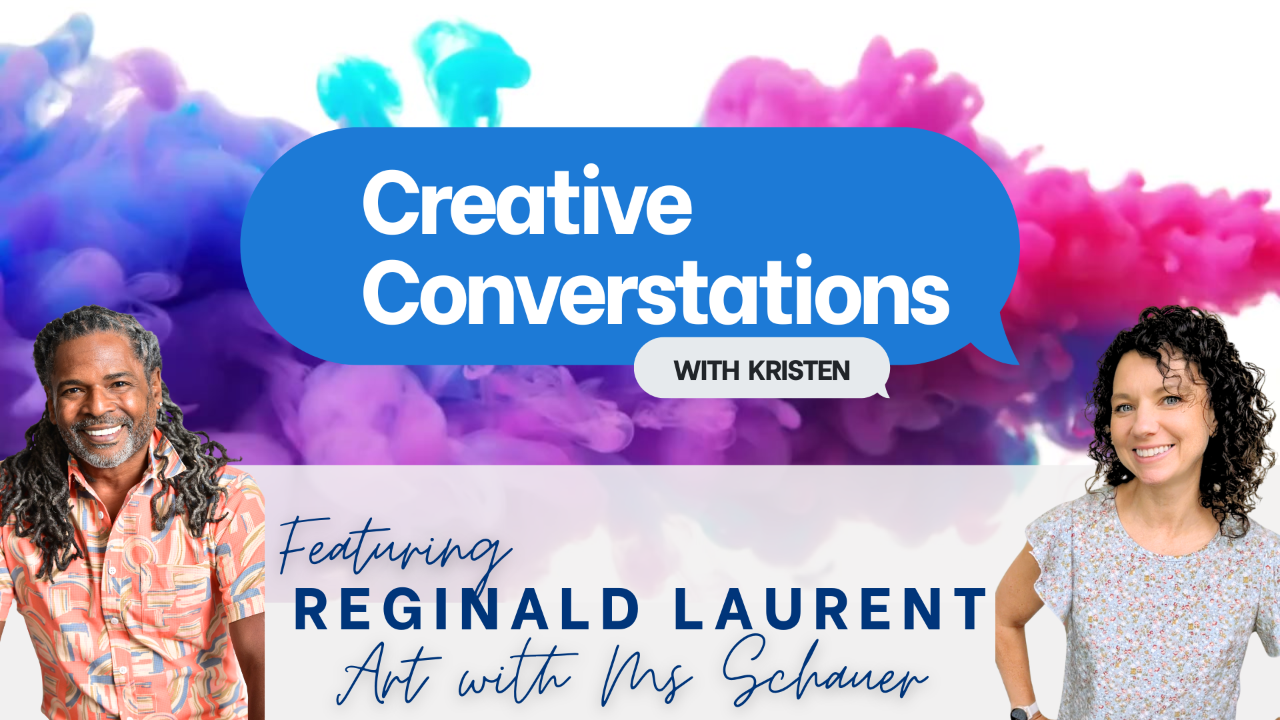
Creative Conversations: Art With No Rules (But So Much Purpose)
A 15-Minute Conversation with Reginald Laurent
There are interviews…
And then there are conversations that stay with you.
This one stayed.
When I sat down with Reginald Laurent for this premier episode of Creative Conversations, I knew we would talk about art. I knew we would talk about students. I knew we would talk about diversity.
What I didn’t expect was how deeply his philosophy would echo the very heartbeat of my own classroom.
Every Shape Stands Alone. Every Shape Belongs.
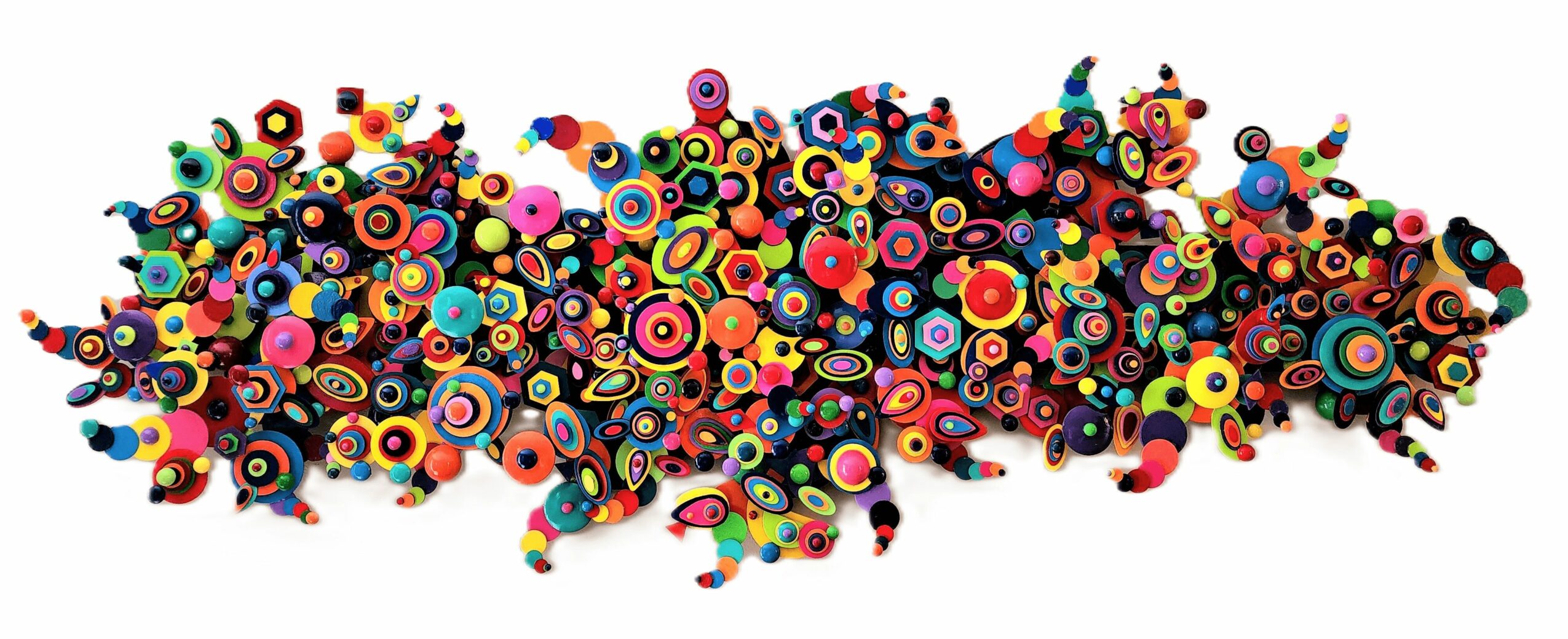
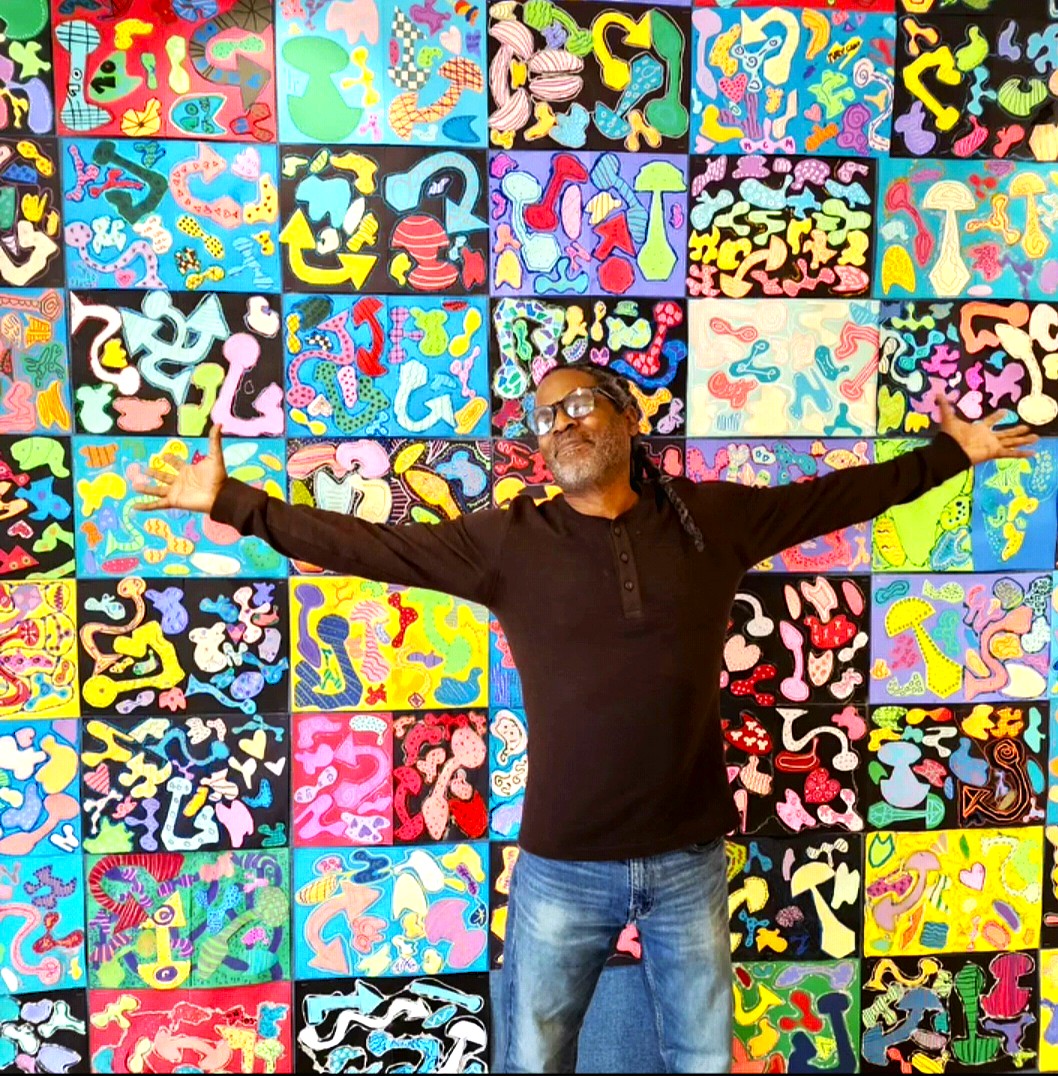
Behind Reginald during our interview was one of his pieces from his DNA series what he calls his House Full of Love. At first glance, you see color. Movement. Layer upon layer of geometric and organic shapes.
But then he says something that changes how you see it:
“None of the shapes intersect in my work. They stand on their own. There’s no hierarchy. Just balance.”
Each shape represents an individual.
No one overlaps.
No one dominates.
Every piece matters.
It’s community on canvas.
He described his paintings as a “visual smorgasbord” detail that pulls your eye across the surface, forcing you to slow down. His work doesn’t ask for a glance. It invites you to linger.
And isn’t that what we want our students to experience with art?
Not quick answers.
Not surface-level thinking.
But depth. Curiosity. Interpretation.

The Art of Diversity (And Why It Resonates)
We recently collaborated on a reel featuring one of his works titled The Art of Diversity. It struck something in people. The views climbed. The comments poured in.
When I asked him why he created it, his answer was simple:
“Every shape belongs. Every shape is essential to the whole.”
He didn’t set out with a grand manifesto. The message evolved as his work evolved. The more he created, the clearer his narrative became.
That’s such a powerful reminder for artists and teachers alike:
Sometimes the message reveals itself as you do the work.
A Visiting Artist Who Sends the Art Home
Here’s the part that makes my art teacher heart explode a little.
Reginald doesn’t just create in galleries. He creates in classrooms.
Through live Zoom sessions, he visits schools across the country (and beyond), collaborates with students in real time, and creates custom collage works with them. He incorporates the school’s logo. He finishes pieces during the session. And then?
He mails them.
He told me he had just left the post office, sending off seven envelopes.
Not because he has to.
Because he wants those pieces to live in classrooms.
To inspire.
He said something I won’t forget:
“I would rather leave something for people than in people.”
Take away museums. Take away collectors.
For him, the legacy is the children.
“There Are No Rules.”
Now let’s talk about the phrase that probably made half of you clutch your paintbrushes.
“There are no rules.”
When Reginald says this to students, he means it. Creatively, there are no limits. If you’re wondering, “I wonder if I could…?” his answer is yes.
Paint a piano.
Paint a baseball bat.
Let pieces come off the paper.
Try it.
But here’s the nuance, and this is where it matters for educators:
There are no rules in creative thinking.
There is structure in the classroom.
He was clear. Materials are respected. The environment is structured. Expectations are understood.
But within that structure?
Freedom.
That balance is everything.
As art teachers, we build the frame.
Inside the frame, students find their voice.
Bring Reginald to Your Classroom
If you’re interested in booking Reginald as a visiting artist for your school, you can learn more about his virtual sessions and custom school collaborations here → Click Here
It truly is a special experience for students to interact with a live, working artist and receive artwork created just for their school.
And if bringing him in isn’t possible right now, I created a classroom-ready collaborative lesson inspired by his Art of Diversity piece. It guides students through building balanced compositions using his philosophy of individuality, unity, and visual storytelling.
You can explore that resource here → Click Here
For the Student Who Thinks They’re “Not an Artist”
Reginald shared something vulnerable.
As a child, he didn’t think he was a “good artist.” He doodled. His work didn’t look like the “real drawings” around him.
So now, when a student says, “I’m not good at art,” he responds with one word:
Different.
Not better.
Not worse.
Different.
And if every piece of art looked the same? How boring would that be?
He told a story about a student who extended collage pieces off the page, pushing the format in a way he hadn’t expected. That’s the magic. When students reinterpret the structure and make it their own.
That’s voice.
Hundreds of Zoom Sessions. Not One Lost to Chaos.
I asked him what art teachers might be thinking hearing “no rules.”
His answer?
He’s done hundreds of sessions.
Not one class has been so unruly they couldn’t create together.
He gave teachers full credit.
When he enters a classroom (even virtually), students are engaged. Curious. Listening.
It was such a beautiful affirmation of what we’re doing daily. The predictable routines. The structure. The environment we build.
The chaos he joked about? That might come later.
But in that moment, art leads.
Why This Conversation Matters
This wasn’t just an artist interview.
It was a reminder.
Art can model what we struggle to live out, unity without sameness. Individuality without hierarchy. Expression without fear.
Reginald’s work does visually what we try to cultivate socially.
And perhaps the most powerful takeaway from our 15 minutes together?
“All we want to do is get kids to create. That’s the main thing.”
Not perfect.
Not polished.
Not identical.
Creating.
If you’re an art educator watching this, I think you’ll feel what I felt: alignment. Affirmation. A renewed sense of purpose.
If you’re a parent, you’ll see how deeply art shapes identity.
If you’re an artist, you’ll be reminded that your voice evolves as you do.
Watch the full 15-minute conversation below.
And then ask yourself:
Where in your life, or classroom, could you say yes a little more freely?
And About That Ending…
If you watch all the way to the end, you’ll notice something. We don’t exactly stick the landing.
He signs off.
I laugh.
I say, "Okay. Bye, I guess."
And then I suggest we probably need a better closing.
We didn’t script it.
We didn’t rehearse it.
We just let it be.
Which feels oddly fitting for a conversation about art with no rules.
Sometimes the beauty is in the unscripted.
Sometimes the magic is in the human.
Sometimes the imperfect ending is the most honest part.
So, we left it. Because at the end of the day, we’re not here for polished perfection.
We’re here to get kids creating.
SUBSCRIBE FOR MORE HELPFUL RESOURCES
Let's stay connected.
We hate SPAM. We will never sell your information, for any reason.